Wytch Farm 2018 Production
This article appeared in Vol. 1 - 2018 Advertisement. What is a Supergiant Field? Resulting in varied production rates. Wytch Farm Ploughs Ahead. Will Thornton Celebrated as the largest onshore oilfield in Western Europe (500 MM bo), the Wytch Farm field in Dorset, southern England, is an iconic field to the thousands of. BP shuts UK field after oil leak BP suffered an oil leak in the Dorset countryside late last year, causing such concern that its biggest onshore field in Western Europe has been shut down for the.

'Water pollution from a coal ash landfill and settling ponds at a closed power plant in Chesapeake is not a violation of the federal Clean Water Act or the conditions of a state permit to enforce the law, a federal appeals court panel ruled.' Why this is important: The Fourth Circuit overturned the lower court's ruling because it determined the lower court misapplied the Clean Water Act. The lower court found that Dominion Energy violated the Clean Water Act because arsenic from one of its coal ash landfills was carried to navigable waters by rainwater and surface water.
The Fourth Circuit reined in an expansion of the Clean Water Act by ruling there cannot be a violation of the Act unless there is a discharge 'from a point source.' 'The draft proposal on the EPA's website, which will be published in the Federal Register, would weaken a 2016 rule requiring energy companies to conduct leak inspections on their drilling equipment as regularly as every six months.'
Why this is important: The natural gas production industry is helping to reduce carbon dioxide emissions from the production of electricity. The contribution of fugitive emissions of methane from modern oil and gas drilling operations is a very minimal source of emissions because current operations are so efficient. These regulations are another attempt to increase the cost and hence discourage the production of shale gas as a fossil fuel. If the EPA really wanted to diminish what is a small contributor to global methane emissions, then it would help underfunded state oil and gas regulators to plug abandoned vertical wells and outdated and leaky gathering systems, which likely contribute the most to any supposed methane emissions. There are tens of thousands of older vertical wells and their associated gathering systems spread across our nation that are either abandoned or in disrepair. A federal initiative to help fund the plugging of these wells and the elimination of leaky gathering systems by the responsible state agencies would be the most beneficial way to approach this potential emission source rather than placing further costs on modern, and much more effective, shale gas operations where this is not a problem.
Wytch Farm Oil Field
'Wytch Farm in Dorset is in the heart of an Area of Outstanding Natural Beauty. But you would be forgiven for not knowing the largest oilfield in western Europe is even there.' Why this is important: Wytch Farm is nestled in a pine forest near a nature reserve and on islands off Poole Harbour, UK. The French company Perenco has owned an oilfield there and has been quietly producing thousands of barrels a day, by means of a form of fracturing, since the late 1970s. Locals say they have never had any seismic impact of which they are aware from the fracturing and opine the drilling work has been very well done. Even fishing ponds close to the main operations still are quite peaceful according to local anglers, none of whom have complained of any fracturing fluid leaking into local waters either.
Warframe crit mods. Argon Scope is a rare rifle mod that increases critical chance while aiming for a brief time upon a headshot. Argon Scope is additive with similar mods. For example, a Snipetron with a max rank Argon Scope and Point Strike will have a 30% × (1 + 135% + 150%) = 115.5% critical. Argon Scope, Increases Critical Hit chance while aiming for a brief time upon a. Sinister Reach, Increases the range of rifle beam weapons. Figure out what mods have critical chance and can be used on Rifles here: http://warframe.wikia.com/wiki/CriticalHit#CriticalHitChance. Critical Hit Chance Edit. Each weapon has a base chance to critically hit, which can be increased through mods and various buffs. Rifle; Shotgun; Pistol; Melee.
In the next few years, the UK is expecting the biggest acceleration of onshore oil and gas drilling since World War II, with tax breaks already announced and 176 licenses issued. 'Staff of the Federal Energy Regulatory Commission (FERC) has not communicated with the White House over a proposal to bail out coal and nuclear generators, the chairman of FERC said in a letter to Congressional Democrats released.'
Why this is important: The Chairman of the Federal Energy Regulation Commission has written Congress that FERC staff is not working with the White House on grid resilience at this time. Comments by a FERC staff member at a recent conference raised concerns it was being worked on by FERC and the Trump administration. Earlier this year, FERC rejected attempts to make grid resilience a factor in deciding whether to close nuclear and coal plants. The Trump administration now is trying to revive the plan. 'The nice part of the story, of course, is that the writer admits solar subsidies are paid for by surcharges on the electrical bills of low and moderate consumers and end up financing the solar virtue-signaling of wealthier households.' Why this is important: Home solar installations are often uneconomical, and the (usually wealthier) homeowners who install them may be subsidized by less affluent ratepayers on the system. Encouraging solar installations by customers of more moderate means will require additional subsidies, to be spread over the rate base.
When evaluating whether the subsidies are worthwhile, the author notes that, in terms of lifetime power generation, a million dollar investment in wind will generate twice as much power as the same solar investment over its lifespan. The same amount of money sunk into a natural gas well will produce 16 times as much electricity. 'If you want to make a real difference in combating global warming, you're better off investing in a pipeline company rather than donating to the Sierra Club.' Why this is important: Williams Companies, through its affiliate Transco and other interstate pipeline companies, are attempting to create the pipeline infrastructure necessary to provide cheap shale gas to markets in the Northeast and Southeast. This provision of clean-burning natural gas reduces harmful emissions while offering a cost-effective source of power to these regions. Environmental groups are opposing the completion of these pipeline networks to the detriment of our environment as well as consumers. The goal of the Sierra Club and others is to eliminate domestic fossil fuel consumption entirely regardless of the consequences to the American consumer in terms of the price and availability of electricity.
And, this anti-consumer advocacy is undertaken as China, India and Europe forge ahead with coal-fired power plants that continue to ramp up the emission of carbon dioxide, mercury and other substances to unprecedented levels. The Sierra Club should focus its money and advocacy on these foreign sources of pollution if they truly want a cleaner worldwide environment. 'Exxon Mobil Corp. Is asking the Supreme Court to block Massachusetts's attorney general from demanding certain information in an investigation over climate change.' Why this is important: Exxon is not only fighting Ms.
Healey's investigation, it is fighting the weaponization of State Attorneys General. The Massachusetts Attorney General's Office is utilizing privately funded legal fellows to investigate fossil fuel companies and to push a clean energy agenda. The legal fellows are funded by former New York City Mayor Michael Bloomberg, and have also been hired by the AG offices in Maryland, New York, Oregon and Washington. The salaries and benefits of the legal fellows are officially paid by the State Energy and Environmental Impact Center ('SEEIC'), and in turn, the AG's are asked to coordinate with SEEIC and 'interested allies on legal, regulatory and communications efforts regarding clean energy, climate change, and environmental issues.' 'Why are northeast gas prices higher today and staying higher? In a word, pipelines.' Why this is important: The importance of pipeline integration for both natural gas and its related liquids is highlighted by this gradual increase in the market price of these commodities as they achieve direct access to our regional markets.
This expansion in pipeline transportation is a safe and environmentally friendly manner of transporting these products. The benefits to the utility consumer and the much safer mode of transporting these substances by pipeline rather than by rail or truck is a win-win for both the public and the industry. 'How does one explain why current American 'environmentalism' is ignoring the one-third of the world's population who need to modernize their sanitation, health care, interior air quality, reliable electricity/grid, and broadband?'

Why this is important: The anti-drilling Southwest Pennsylvania Environmental Health Project ('EHP') has offered up 'research' in a pay-for-play journal as supposed justification for a quarter mile stand-off between gas wells and occupied dwellings. Such a stand-off would eliminate about 90 percent of all shale drilling in Pennsylvania (arguably EHP's goal). Yet, wells drilled on school property in Susquehanna County, Pennsylvania are only feet away from school buildings. That school is flourishing, with a huge new revenue source, and the students present no health problems from the 'fractured wells,' which are only a fraction of the distance away from that demanded by EHP. American 'environmentalism' is ignoring one-third of the world's population who need to modernize their sanitation, health care, interior air quality, reliable electricity/grid and broadband.
Contemporary 'green' activism seems downright inhumane, short-sighted, uneconomic and pessimistic about the roughly two billion people not yet living in the modern world. Several million people die every year in the developing world from basic diseases caused by interior air pollution, dirty water and poor sanitation. This morbidity and mortality could be improved substantially by unleashing, rather than hindering, tight oil and gas development.
'But in gas, China is not a dominant player. It consumes just 6.6 percent of the world's total, although it is still the world's third-largest market after the U.S. Why this is important: China is hungry for natural gas imports.
Sending LNG exports from the U.S. To China is not only beneficial for our domestic economy, but also reduces China's dependence on coal as an energy source. However, the unfortunate trade war between our country and China has made U.S. Sources of gas less attractive compared to other suppliers. Notably, Russia now is constructing an eastern pipeline route for Gazprom to export Russian natural gas directly to China.
The longer our country is caught up in tariff wars with China, the more our domestic natural gas industry will suffer. 'A colossal Canadian oil-sands project may be showing the way forward for an industry many thought would never see new investments.' Why this is important: Over the last several years, low petroleum prices forced Canadian tar sands oil producers to up their game, just as unconventional oil and gas producers in the lower 48 improved efficiencies during the downturn in prices.
The result is improvements such as driverless trucks, froth treatments and centrifuges that allow production costs to drop and keep mines open, and maybe even expand. There are high upfront costs associated with oil sands mines, but the decades of steady production that are possible make them attractive to those with long investment horizons.
Coal production totaled an estimated 15.6 million st in the week ended September 1, up 0.8 percent from the prior week and down 0.5 percent from the year-ago week, U.S. Energy Information Administration data showed.' Why this is important: U.S.
Coal production had good production weeks in August. Central Appalachian production of 2 million short tons was up 16.3 percent over last year. Illinois production is stabilized. Powder River Basin coal production for the week was up 2.3 percent over last year, but still below 2017 levels. Production is on target for 754 million tons in 2018-down 20 million tons from last year. This is an attorney advertisement.
Your receipt and/ or use of this material does not constitute or create an attorney-client relationship between you and Spilman Thomas & Battle, PLLC or any attorney associated with the firm. This e-mail publication is distributed with the understanding that the author, publisher and distributor are not rendering legal or other professional advice on specific facts or matters and, accordingly, assume no liability whatsoever in connection with its use.Responsible Attorney: Michael J. Basile, 800-967-8251.
The Wytch Farm oil field, located 17 miles from Poole and six miles from Wareham in the Purbeck district, Dorset, England, is the in Europe. It is a mature oil field that has been extracting oil and associated gas from sandstone and limestone oil reservoirs in the Wessex Basin since 1979. The oil field is undergoing development to extend its operational life by 21 years to 2037.French oil and gas company Perenco holds 50.10% interest and operates the Wytch Farm. The other stake holders of the onshore field include Premier (30.09%), Maersk (7.43%), Summit (7.43%) and Talisman (4.95%). Wytch Farm reservoir detailsThe Wytch Farm oil field comprises three separate oil reservoirs, including the Bridport and Sherwood Jurassic sandstone oil reservoirs and the Frome clay/limestone oil reservoir.
Bridport, lying 900m beneath surface, was discovered in 1973. The Sherwood reservoir, situated at a depth of 1,600m was discovered in 1978. The Frome reservoir, containing 7.5 million barrels of oil at a depth of 750m, was discovered later.The ultimate recoverable oil reserves (including cumulative production and remaining reserves) of the Wytch Farm oil field as of 2003 were estimated at 480 million barrels with the Sherwood reservoir accounting for around 90% of the total reserves. The remaining oil reserves of the field as of September 2013 were 43 million barrels. History and development of the Wytch Farm oil projectThe Wytch Farm oil field was discovered and initially operated by the nationalised British Gas Corporation.
The first phase of the field development, completed in 1980, involved four well sites targeting the Bridport reservoir.BP, after taking over as operator of the field in 1984 following the privatisation of British Gas, upgraded the existing well sites and constructed five new well sites as part of the second phase development initiated in 1987. The field started producing from both Bridport and Sherwood reservoirs with the completion of the second phase. The reserve base of the oil field was also raised from 30 million barrels to 378 million barrels. Established in 1968, the Lindsey oil refinery is wholly owned by Total, and is located five miles from the Humber River in North Lincolnshire, UK.The third phase of development initiated in 1993 involved extended reach drilling from the mainland under Poole Bay and the construction of a new well site on the Goathorn Peninsula.The oil production from Wytch Farm peaked at 110,000 barrels per day in 1997 compared to 6,000 barrels per day in 1984. The oil production, however, gradually declined since then to 50,000 barrels per day in 2002 and to 16,000 barrels per day in 2011.BP, in 2011, sold its 67.8% interest in the Wytch Farm to Perenco which further sold 17.7% to Premier. The new operator started infill drilling at the site in the first quarter of 2012. Infrastructure at the Wytch Farm oil fieldMore than 100 wells (including producers and water injectors) were being operated from 13 well sites at the Wytch Farm oilfield as of June 2012.
The oil field also uses a sea water.The fluid output from the well sites is sent via infield pipelines to the gathering station located at Wytch Heath where crude oil and liquid petroleum gases (LPGs) are separated. Oil from two other Perenco-operated smaller oil fields namely Wareham and Kimmeridge is also transported to the Wytch Farm gathering station for processing.Oil from the gathering station is sent via a 91km long and 16-inch diameter pipeline via the Fawley refinery to the Hamble oil terminal. Natural Gas (methane) produced at Wytch Farm is piped to Sopley located north of Christchurch. The LPG produced from the gathering station is exported by road tankers. Oil and gas production from the onshore fieldThe average daily oil production of the oil field during the year ending in November 2013 was more than 17,000 barrels.
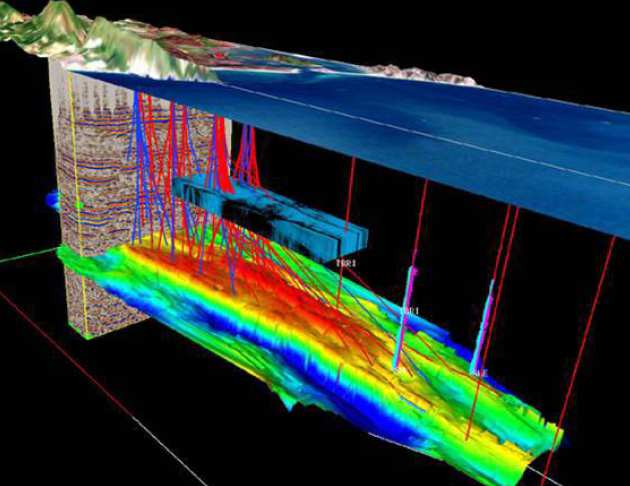
The associated gas production from the field averaged at three million cubic feet during the period. Wytch Farm was the UK’s fifth biggest oil producing field and the highest producing onshore oil field in 2013. 'The average daily oil production of the oil field during the year ending in November 2013 was more than 17,000 barrels.' Future development of the UK’s largest onshore oil fieldPerenco was granted permission by the Dorset County Council in September 2013 to extend the field life of Wytch Farm from 2016 to 2037. The approval, however, necessitates the operator to restore the surrounding environment and prohibits against fracking wells for shale gas at the field which is located in one of the most environmentally sensitive areas of the UK.The future development at the oilfield will include drilling new wells and maintaining the existing ones. Perenco drilled three new wells as part of the infill drilling programme at the site as of 2013.